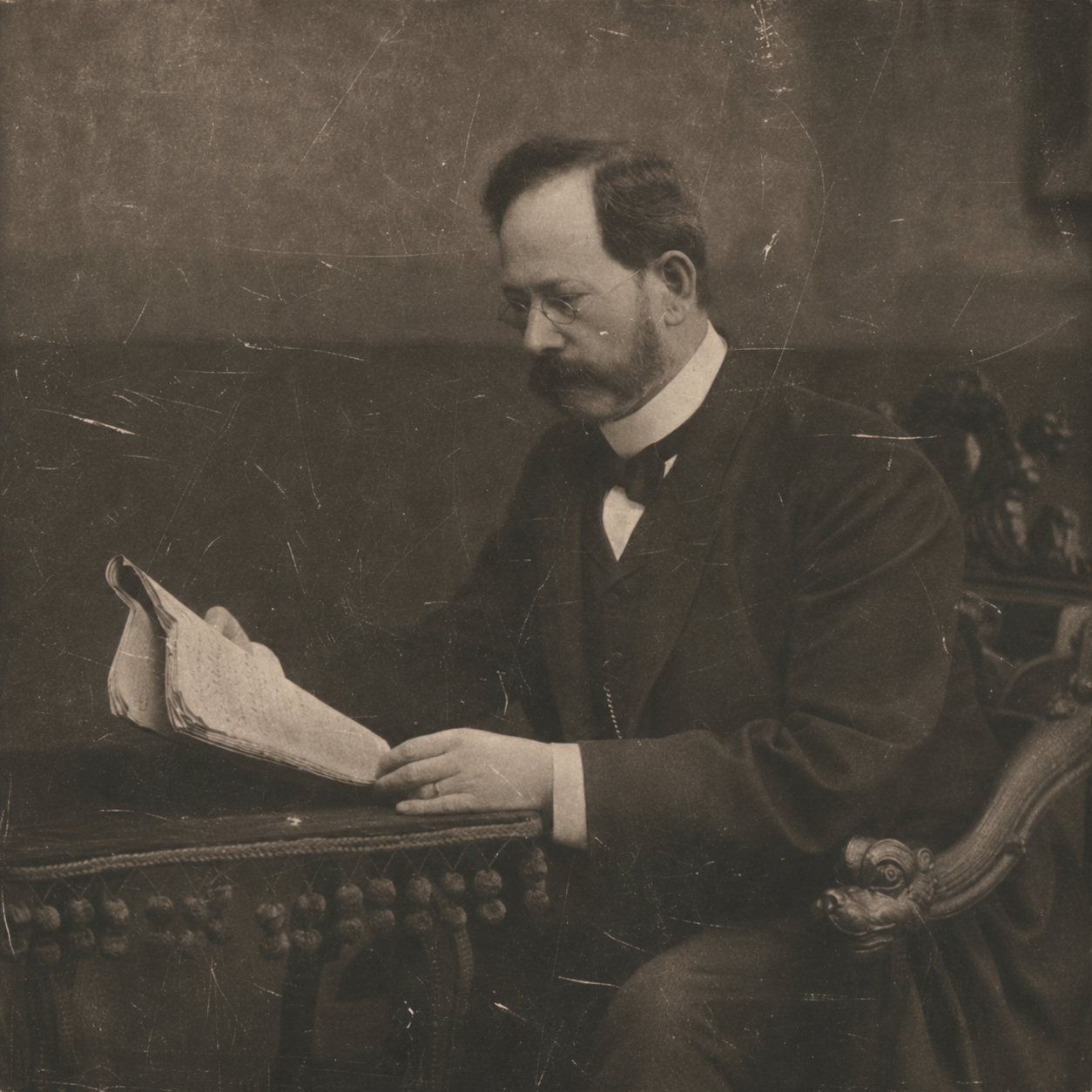
The Archive as Counterhistory: The Reception of Christian Sources in the Eduard Birnbaum Collection
Keywords:
intellectual history, historiography, Eduard Birnbaum, Jewish music research, German Jews, Jewish–Christian relation, nineteenth centuryAbstract
This article reexamines the intellectual genealogy of modern Jewish music research by focusing on a largely overlooked facet of cantor Eduard Birnbaum’s (1855–1920) archival practice: his systematic collecting, annotating, and historicizing of Christian sources on Hebrew music. While prevailing narratives have credited Birnbaum and his contemporaries with inaugurating an empiricist, scientifically grounded approach to Jewish music through the collection of liturgical and secular repertoires, this study demonstrates that Birnbaum’s archival work was far more expansive—and subversive—than simple documentation. Drawing on Susannah Heschel’s and Philip V. Bohlman’s concepts of “counterhistory,” the article theorizes “archival counterhistory” as both a critical posture and a mode of historiographical intervention through which Birnbaum used the archive not only to interrogate and contest dominant Christian narratives but also to document an intellectual history into the field of Jewish music research that was inclusive of both Jewish and non-Jewish sources.
The analysis examines Birnbaum’s unfinished bibliographical project, “Literaturgeschichte der hebräischen und synagogalen Musik,” alongside his annotated manuscripts and materials from the Mus. 77 subcollection, demonstrating how he reframed Christian sources as historicized artifacts and integrated them into a more entangled, dialogic genealogy of Jewish and Christian scholarship. Through detailed readings of Birnbaum’s engagement with figures such as Johann Gottfried Herder, Emil Naumann, and Johannes Reuchlin, the article illuminates how he moved between critique and appropriation to reckon with and construct a foundational narrative of Jewish musicology.